Amazon Prime, Meet Your Real Beneficiary: The Cardboard Box Conspiracy Your Cat Has Been Running All Along
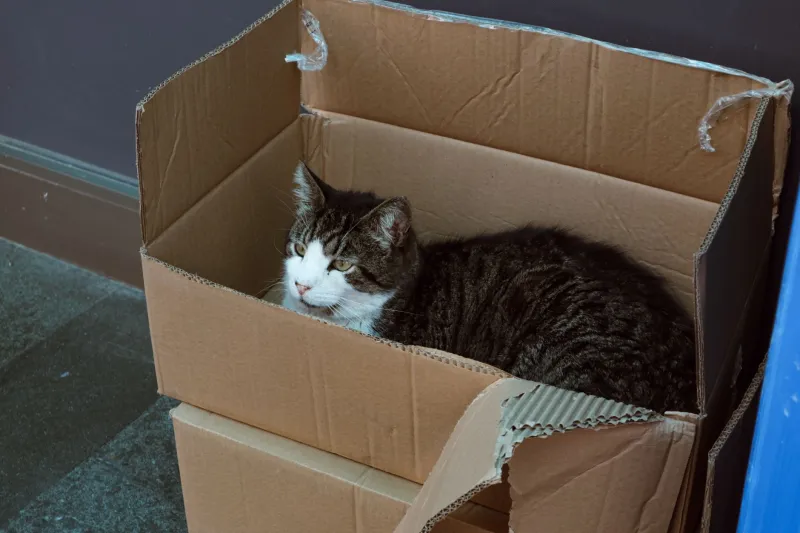
Let's set the scene. It's a Tuesday evening. You've assembled a six-foot cat tree — the kind with multiple platforms, dangling toys, a hammock, and what the product listing described as a "sisal-wrapped scratching post for maximum enrichment." You stepped back, admired your work, and felt genuinely proud of yourself as a cat parent. Then your cat walked directly past the entire structure, climbed into the empty cardboard box it came in, and has not moved since.
Congratulations. You have been played.
This is not a new phenomenon. It is not a fluke. It is, according to a growing number of exasperated cat owners across the United States, a deeply organized and possibly deliberate rejection of everything you thought you knew about making your cat happy.
The Box Economy: What Your Cat Knows That You Don't
Here's the uncomfortable truth: cats have been living rent-free inside cardboard boxes since approximately the invention of cardboard boxes, and no amount of fleece-lined furniture with a retail price tag is going to change that calculus.
Feline behaviorists — yes, that is a real job, and yes, they have heard every single box story you're about to tell them — point to a few genuinely interesting reasons why cats are so magnetically drawn to humble corrugated cardboard.
First, there's the security angle. A box has walls. Walls mean your cat can see the entrance, monitor threats, and feel like a tiny general surveying a very small kingdom. Your $300 cat tree, meanwhile, is open on all sides, exposed to the elements (your living room), and frankly vulnerable to ambush from the dog, the toddler, or the Roomba. A box is a fortress. A cat tree is a liability.
Second — and this one stings a little — cardboard actually retains heat remarkably well. Cats run warmer than humans and are constantly seeking the most thermally efficient napping location available. That box? It's essentially a custom-fitted sauna. Your cat is not being difficult. Your cat is being smart.
Third, and perhaps most damningly, cardboard smells interesting. Every box that arrives at your door has traveled through warehouses, delivery trucks, and sorting facilities, accumulating a rich aromatic tapestry that your cat finds absolutely riveting. Your cat tree smells like a factory and shipping foam. The Amazon box smells like an adventure.
A Completely Unofficial Ranking of the Most Prestigious Boxes in American Households
Not all boxes are created equal. Any experienced cat owner will tell you that their cat has opinions — strong, non-negotiable opinions — about which boxes deserve occupancy and which ones are merely adequate. Based on extensive (completely anecdotal) research gathered from cat owners who have given up trying to understand any of this, here is an unofficial prestige ranking.
Tier One: The Appliance Box. A refrigerator box, a washing machine box, a television box. These are the penthouse suites of the cardboard world. Enormous, structurally sound, and capable of housing an entire cat empire. If you leave one of these in your garage for more than forty-eight hours, it belongs to your cat now. It has always belonged to your cat.
Tier Two: The Amazon Oversize Box. You ordered one item. It arrived in a box large enough to mail a medium-sized child. Your cat has already moved in and is accepting no visitors.
Tier Three: The Wine Shipment Box. Those little cardboard dividers? Perfect for a cat who wants to feel like they're staying at a boutique hotel with individual room separations. Sophisticated. Refined. Your cat has taste.
Tier Four: The Cereal Box. Technically too small. Your cat will attempt to sit in it anyway, overflowing on all sides, and will maintain eye contact with you the entire time as if daring you to say something.
Tier Five: The Shoe Box. A classic. Timeless. The studio apartment of cat boxes. Perfectly acceptable, especially if the lid is nearby for a potential roof situation.
The Cat Tree Sits in Judgment
Meanwhile, the cat tree watches. It stands in the corner of the living room, all six plush-covered feet of it, silently accumulating dust on the platforms your cat has never once visited. You may have draped a blanket over the top level to make it more appealing. You may have rubbed catnip into the hammock. You may have placed your cat on the second platform manually, only to watch them immediately climb down and return to the box.
This is not personal. Or rather, it is extremely personal, but not in the way you think.
Cats are not rejecting the cat tree because they hate you. They are rejecting it because they are operating on a completely different value system than the one you used when you purchased it. You bought the cat tree based on what looked enriching, stimulating, and worth the money. Your cat is evaluating based on warmth, security, smell, and the sheer psychological satisfaction of choosing something you clearly didn't intend for them.
That last part is important. There is a non-trivial body of evidence suggesting that cats derive genuine satisfaction from using objects in ways their owners didn't plan. The forbidden houseplant. The laptop keyboard. The one specific corner of the couch you asked them not to scratch. The box you were about to break down and put in the recycling.
Your cat is not confused. Your cat is making a statement.
How to Make Peace With the Box Situation
Veteran cat owners — the ones who have been through the full cycle of expensive furniture purchases and subsequent box-related humiliations — generally arrive at the same conclusion: stop fighting it.
Leave the box out. Reinforce it if necessary. Cut a little door in the side if you're feeling creative. Accept that your living room now contains both a premium cat tree and a slightly dented cardboard box from a bulk paper towel delivery, and that only one of them is being used.
Some owners have gone further, constructing elaborate cardboard box configurations — cities, mazes, multi-room estates — and documenting their cats' reactions online to significant viral success. This is, arguably, the correct response. If you cannot beat the box economy, become its architect.
The cat tree is not wasted. It is decorative. It is a monument to optimism. And someday — possibly when you have given up entirely and stopped paying attention — your cat will climb to the very top platform, stare out the window for eleven minutes, and then climb back down.
And you will feel, briefly, like you won.
You didn't. But you'll feel like it. And sometimes that's enough.