Kibble Traitor: The Suspicious Timing of Your Cat's Sudden Wet Food Awakening
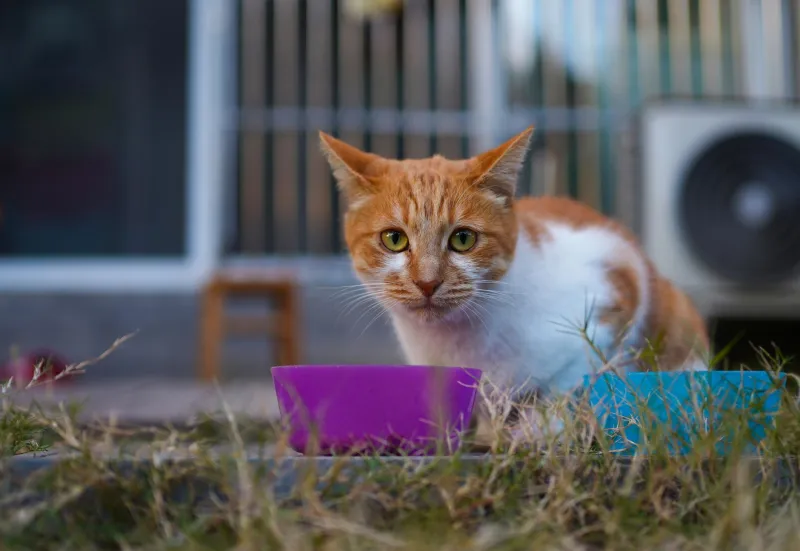
For three years — three years — the routine was sacred. You scooped the kibble. You set down the bowl. Your cat ate the kibble. Nobody cried. Nobody dramatically pawed the food across the kitchen floor like a tiny, furious line cook rejecting a dish that didn't meet their standards. It was a beautiful, functional system.
And then your cat watched you open a can of tuna for your own lunch, and something inside them shifted.
Now you're standing in the pet food aisle at 8 PM on a Wednesday, squinting at the difference between "Salmon Pâté in Broth" and "Savory Salmon Entrée in Sauce" — because apparently those are two entirely different things with entirely different implications for your cat's willingness to eat breakfast tomorrow. This is your life now. This is what loyalty gets you.
The Three-Year Lie
Here's what nobody tells you about cats and dry food: they don't actually love it. They tolerate it. Kibble is the fast food of the cat world — convenient, shelf-stable, and perfectly acceptable until your cat catches a whiff of something better and realizes they've been settling.
The really unsettling part? They knew the whole time. Every morning for 1,095 days, your cat looked at that bowl of dry pellets and made a quiet, calculated decision: I will eat this because there are no other options currently on the table. They were biding their time. Running the numbers. Waiting for an opening.
That opening arrived the moment you left a can of Fancy Feast on the counter by accident. Or your neighbor's cat visited and smelled like something better. Or — and this is the most likely explanation — your cat simply decided that three years was a reasonable trial period and they were ready to submit their feedback.
The Dramatic Hunger Strike Phase
The pivot never happens gradually. There is no gentle transition period where your cat politely samples wet food while continuing to eat kibble as a backup. No. What happens is a full, theatrical refusal so committed that you genuinely start to worry.
They approach the bowl. They sniff it with the energy of a food critic who just found a hair in their entrée. They look up at you — directly at you — with an expression that communicates, without ambiguity, that they hold you personally responsible for this. Then they walk away. Sometimes they scratch the floor around the bowl, which is cat for "I am symbolically burying this insult."
You try a different brand. Same ritual. You try warming it up slightly, because you read somewhere that cats prefer food at room temperature. You try mixing a tiny bit of wet food into the kibble as a compromise offering. Your cat eats around the kibble with surgical precision, licks the wet food residue off three individual pieces, and then walks away from the rest like they've made their point.
They have made their point.
What the Vet Says vs. What Your Cat Says
At some point during this standoff, you call your vet. The vet, who is a reasonable professional, explains that cats can develop new food preferences as they age, that wet food does have legitimate hydration benefits, and that a gradual transition over seven to ten days is typically recommended.
Your cat has opinions about the seven-to-ten-day timeline. Specifically, they feel it is too long and that the correct timeline is immediate. Right now. Before you finish reading this article.
What nobody in the veterinary community fully accounts for is the social dimension of this transition — the fact that your cat isn't just changing their diet, they're renegotiating the terms of your entire relationship. The wet food demand is not really about wet food. It is about leverage. It is your cat discovering, perhaps for the first time, the full extent of their power over your schedule, your grocery budget, and your emotional well-being.
The Gourmet Spiral Is Real and It Has No Bottom
Here's where things get genuinely concerning: wet food is just the beginning. Once your cat establishes that preferences are negotiable, the preferences will continue to evolve.
First, it's wet food versus kibble. Then it's this brand of wet food versus that brand. Then it's pâté texture versus chunks-in-gravy texture, which, it turns out, is not a minor distinction — it is a dealbreaker. Then your cat decides they're only interested in poultry flavors on Mondays, Wednesdays, and Fridays, and will accept fish on alternating days, but only if it's not the kind with visible flakes because apparently that's a whole thing now.
You will develop a rotation system. You will keep a mental inventory of what was rejected last week so you don't accidentally repeat it. You will, at some point, find yourself explaining to a houseguest why there are seven different varieties of cat food in your pantry, and the explanation will take longer than you expect.
The Gaslight Element Nobody Talks About
The part that really gets you — the part that should be studied by behavioral psychologists — is that your cat will occasionally, without warning, eat the old kibble again. Just to keep you honest.
You'll be out of their new preferred food, or you'll be traveling and whoever is watching your cat doesn't have the wet food protocol memorized yet, and somehow your cat just... eats the dry food. Without complaint. Like it's fine. Like the previous two weeks of theatrical starvation and meaningful eye contact were a fever dream you had.
And you'll think: maybe they're over it. Maybe we're back to normal.
You are not back to normal. Your cat simply wanted you to know that the hunger strike was a choice, not a necessity. That they could eat the kibble if they wanted to. That what's happening here is a preference, not a limitation — and preferences, unlike limitations, can be enforced indefinitely.
How to Accept Your New Role
The path forward is really just acceptance. Your cat has decided that wet food is the standard, and the most efficient use of your energy is to update your shopping habits rather than negotiate with someone who communicates exclusively through staring and floor-scratching.
Buy the wet food. Establish the rotation. Keep a backup variety for when the primary variety falls out of favor, which it will. Accept that your cat's palate will continue to develop in directions you cannot predict, and that this is simply part of sharing a home with a small, opinionated animal who has strong feelings about broth consistency.
The kibble days were good while they lasted. Three years of simplicity and routine — a closed chapter in your relationship, viewed now with the kind of nostalgic warmth you reserve for things that are definitively gone.
Your cat, for their part, has no nostalgia. Only standards. Only the bowl in front of them, and the very reasonable expectation that it will contain something worth eating.
Set the bar, Albert Cat readers. Your cat already has.