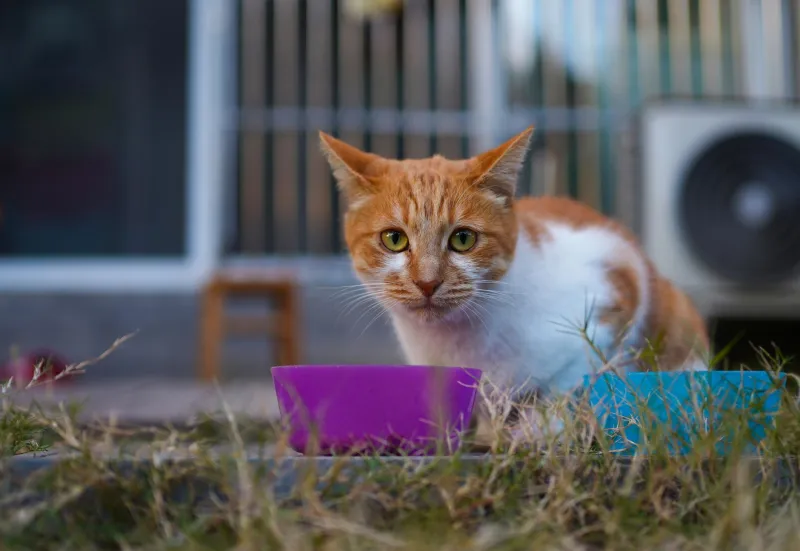
Three Years of Loyalty, Gone in an Afternoon: The Baffling Window Abandonment Crisis
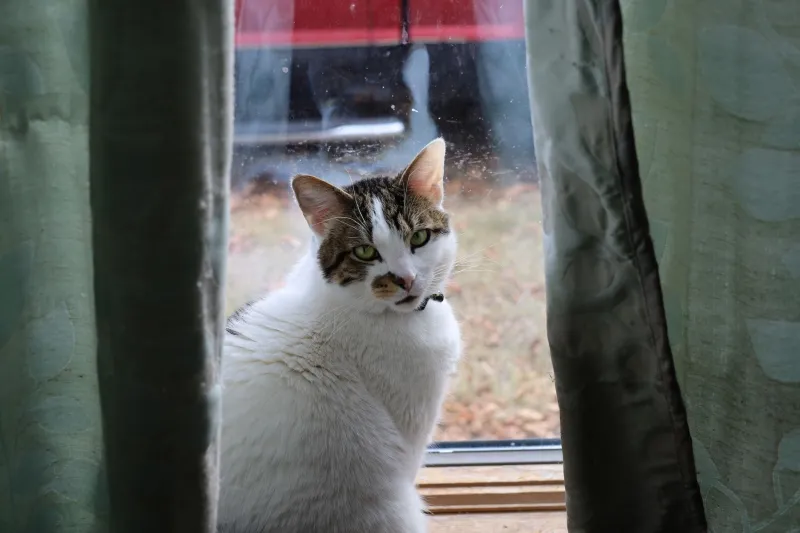
You bought the window perch in 2021. You measured the sill, read seventeen reviews, paid the kind of shipping fee that made you briefly reconsider your life choices, and installed the thing with a level of precision usually reserved for IKEA furniture that actually matters. And for three glorious years, your cat — let's call her Duchess — made that window her entire personality.
Sunrise: Duchess at the window. Squirrel on the lawn: Duchess at the window, pupils blown wide like she was witnessing the moon landing. FedEx truck rumbling past: Duchess at the window, issuing a noise somewhere between a chirp and a personal threat. That window perch was her throne, her studio apartment, her corner office with a view.
Then last Tuesday, she walked past it without even a glance and has not returned since.
No explanation. No transition period. No exit interview.
Welcome to the Great Window Abandonment, one of the most emotionally confusing events in modern pet ownership.
Phase One: Denial (Days 1–3)
The first thing you probably did was assume a temporary disruption. Maybe a weird bird showed up. Maybe a neighborhood cat had the audacity to stroll through the yard and ruin the whole vibe. You waited. You watched. You casually repositioned Duchess near the perch like you were just hanging out and definitely not stage-managing a reconciliation.
She sat on the floor directly next to the perch and stared at the wall.
This is the denial phase, and it's important to move through it quickly, because the longer you spend rearranging throw blankets on the perch and hoping for the best, the more Duchess is going to interpret your desperation as weakness.
The Pseudo-Scientific Explanation Nobody Asked For
In the interest of journalistic integrity — and because someone has to do this — let's explore the leading theories behind sudden perch abandonment.
The Territorial Recalibration Hypothesis. According to no credentialed scientists and entirely our own speculation, cats maintain a mental map of their territory that gets updated on a schedule determined by factors completely invisible to human perception. A new smell from outside. A shift in the angle of afternoon light. A squirrel who moved on. One Tuesday, Duchess simply ran the numbers and concluded the window no longer served her strategic interests. The perch has been geopolitically decommissioned.
The Preference Elevation Theory. This one stings. It suggests that Duchess didn't lose interest in the window so much as she outgrew it. She's evolved. The window was fine for her 2021 era, but she's a different cat now — more sophisticated, harder to impress. You're still listening to the same playlist; she's moved on to something you can't hear.
Seasonal Atmospheric Disturbance. This is the most generous interpretation and the one you'll probably land on because it implies the situation is temporary. Maybe the angle of winter sunlight shifted just enough to make the perch three degrees cooler than optimal. Maybe the yard smells different in February. Maybe spring will bring Duchess back to her post like a snowbird returning to Florida.
Maybe. But also: probably not.
The Pure Chaos Principle. The simplest and most accurate theory. Cats are agents of entropy who occasionally make decisions for no reason other than to remind you that your understanding of cause and effect does not apply to them. Duchess abandoned the window because she could. Because the universe is vast and indifferent and she is a small orange cat who answers to no one.
What You Will Actually Do (A Tragedy in Three Acts)
Act One: You will clean the window. Streak-free. You'll think, maybe she can't see through it properly anymore, and you'll Windex that thing into a state of optical perfection. Duchess will walk by without looking up.
Act Two: You will move the perch to a different window. You'll spend twenty minutes repositioning it, then stand back and feel genuinely optimistic. Duchess will investigate it for forty-five seconds, sit in the spot she used to occupy before you bought the perch, and fall asleep on the carpet.
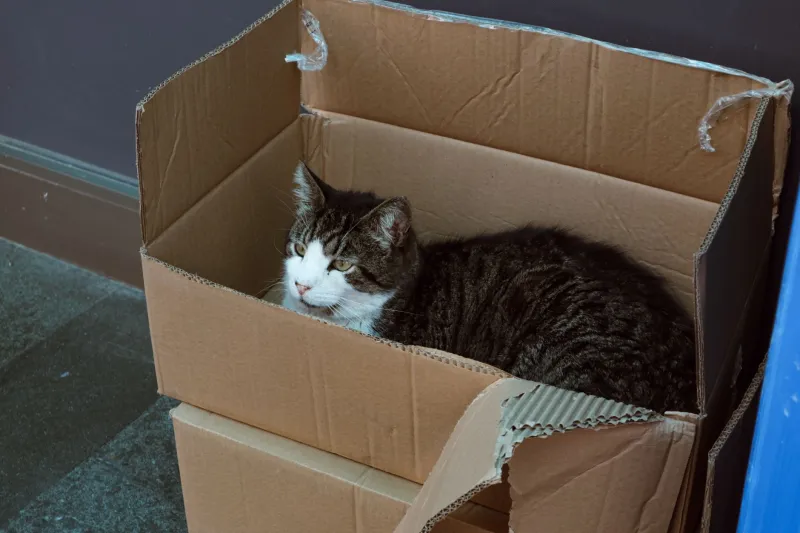
Act Three: You will buy a new perch. A bigger one. One with a little fleece insert and an elevated platform. It will arrive in a box approximately four times larger than necessary, and Duchess will spend three days sleeping exclusively in that box while the new perch sits unused in the corner like a very expensive art installation.
The Emotional Toll Nobody Talks About
Here's the thing they don't put on the pet ownership brochures: you get attached to your cat's routines almost as much as your cat does. Probably more, honestly, because you are capable of nostalgia and Duchess is not.
You liked knowing she'd be at that window in the morning. You liked watching her track birds with the focused intensity of a wildlife documentarian. You liked that she had a thing, a spot, a predictable piece of herself that you could count on. And now it's gone, and you're left standing in your living room at 7 AM holding a coffee cup and staring at an empty perch like it owes you an apology.
It doesn't. Duchess doesn't. That's not how this works.
The Silver Lining (Squint Hard)
If there's any comfort to be found here — and I want to be honest that there isn't much — it's this: Duchess will find a new spot. She always does. In two weeks or two months, you'll notice her absolutely locked in somewhere else. The top of the refrigerator. A specific patch of bathroom floor. The one couch cushion you actually care about.
And she'll love that spot with the same complete, uncomplicated devotion she once gave the window. For approximately three years, give or take a random Tuesday.
You'll buy her a new perch for it. You'll read the reviews. You'll pay the shipping.
Some lessons, it turns out, we are simply not built to learn.
Albert Cat has no official position on window perch geopolitics but remains deeply invested in the outcomes.