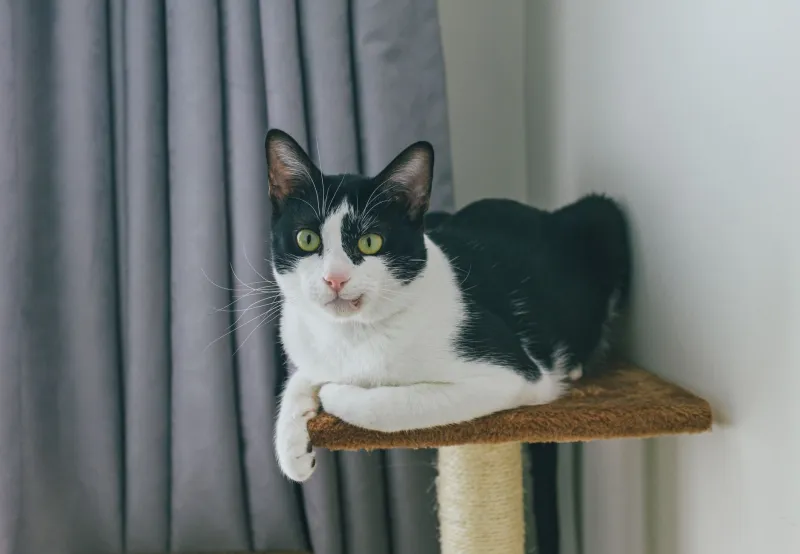
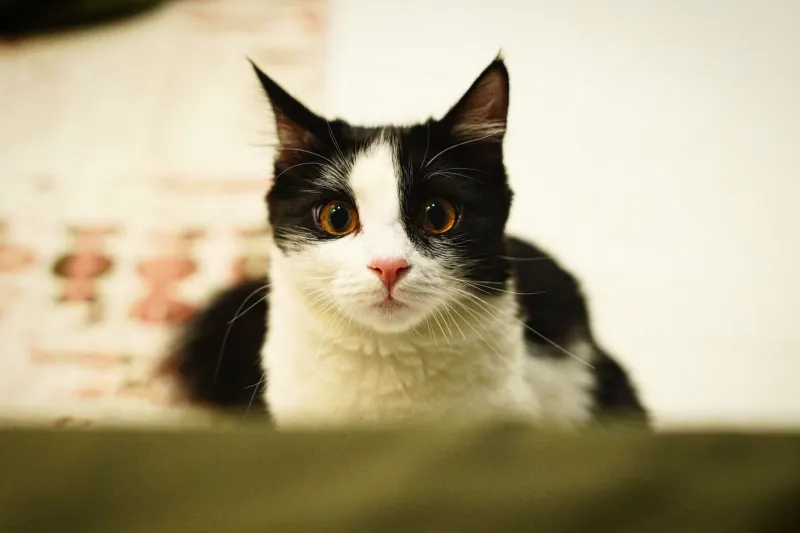
Scratch That: A Field Investigation Into Why Your Cat Only Destroys the Things You Actually Care About
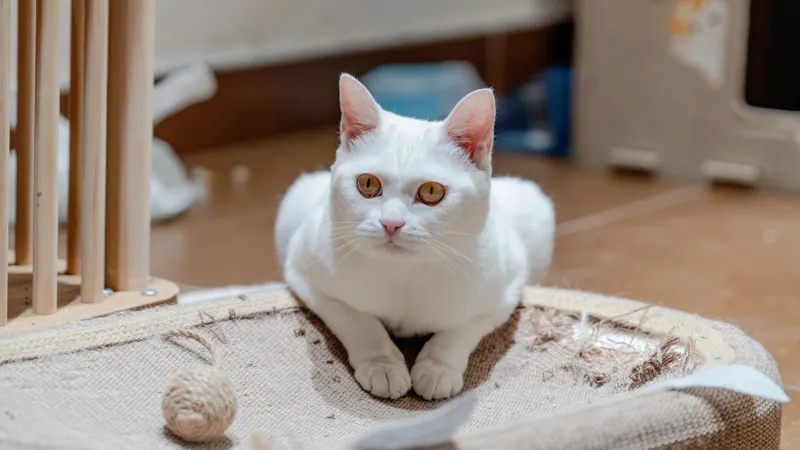
Let's establish some facts. You own a scratching post. It is sisal-wrapped, appropriately tall, and positioned — per the instructions of three different YouTube cat behaviorists — in a "high-traffic area near a preferred resting spot." It smells faintly of the catnip spray you applied in a moment of pure, naive hope.
Your cat has never touched it. Not once. Not even by accident.
Your velvet armchair, the one you drove forty-five minutes to a furniture store in New Jersey to find in exactly the right shade of midnight blue? Absolutely destroyed. Structurally compromised. A ghost of its former self. A cautionary tale you now use when talking friends out of velvet.
This is not random. This is not bad luck. This is policy.
The Targeting Algorithm Nobody Asked For
Cats scratch for real, documented reasons — territorial marking, claw maintenance, stretching, the release of scent glands in their paw pads. Cat behaviorists will tell you this with great seriousness, and they are correct. What they will not tell you, because it is professionally inconvenient, is that cats appear to run these legitimate biological needs through some kind of internal targeting system that consistently outputs: the most expensive thing in the room.
Consider the data. The sisal post: untouched. The cardboard scratcher shaped like a couch, which cost $8 and arrived in a dented Amazon box: ignored. The actual couch, which cost $2,400 and arrived in a truck with two men who made you sign a form: annihilated.
This is not a coincidence. Researchers studying feline behavior note that cats prefer surfaces with the right texture, the right resistance, and — critically — the right height. Furniture, it turns out, nails all three. It's tall enough to allow a full stretch. It has texture. And it is, in the cruelest possible twist, exactly where you sit, which means it carries your scent, which means scratching it is, from a territorial standpoint, basically your cat filing paperwork that says this is mine now, actually.
Your couch is not being destroyed. It is being claimed.
The Economics of Loving a Cat
At some point in every cat owner's life, there is a reckoning. You sit down with a notepad — or, more likely, you lie awake at 2 a.m. doing the math in your head — and you try to calculate what your cat has cost you in furniture alone.
There's the couch. The rug that used to be in the living room and is now in a dumpster behind your building. The curtains that were, briefly, a climbing apparatus. The corner of the drywall that you still haven't explained to your landlord. The ottoman that looks like it survived a minor industrial accident.
Now add the preventative spending. The scratching posts — plural, because you kept trying. The furniture covers, the double-sided tape, the spray bottles of deterrent that smelled so bad you ultimately removed them yourself. The furniture protector sheets that your cat simply scratched through, which, honestly, respect.
The American Pet Products Association reports that Americans spend over $150 billion a year on their pets. A meaningful chunk of that is not food or vet bills. It is furniture replacement and furniture protection and furniture-adjacent products that exist entirely because cats have decided that the concept of "not scratching the couch" is not something they're prepared to explore at this time.
What the Furniture Industry Refuses to Acknowledge
Here is a billion-dollar market insight that furniture manufacturers have somehow failed to absorb: cats exist. Cats are in approximately 45 million American households. Cats scratch. This is known. This has been known for thousands of years. Ancient Egyptians worshipped cats and presumably also had shredded furniture, which historians are too polite to mention.
And yet. You walk into a furniture store in 2025 and the options remain: regular fabric that cats will destroy, or leather, which cats will also destroy but in a different, more heartbreaking way — little puncture marks, like a map of every time your cat decided to knead the armrest while you were watching TV and feeling briefly, dangerously content.
There are a handful of "pet-proof" furniture lines emerging, and bless them, but they are priced at a level that assumes you have already accepted that your cat is your primary financial dependent and you are simply managing the relationship. Which, to be fair, is accurate.
The scratching post industry, meanwhile, has innovated — there are now posts in every conceivable shape, material, and orientation. Horizontal. Vertical. Angled. Wall-mounted. Freestanding. Covered in carpet, sisal, cardboard, wood. And cats will try approximately one of them, declare it acceptable, use it twice, and then go back to the armchair.
The Partner Variable
A special note must be made about the phenomenon of cats targeting specifically the furniture belonging to the person in the household who likes cats the least.
This is observed so frequently that it has moved beyond anecdote into something approaching documented pattern. The partner who was "not really a cat person" but agreed to the adoption out of love? Their chair. Their side of the couch. Their reading nook. All of it, systematically selected.
Cat behaviorists suggest this is because people who are less comfortable with cats tend to avoid eye contact and move more slowly around them, which reads as less threatening, which makes the cat more likely to approach them and, by extension, their belongings. This is a scientifically reasonable explanation that does absolutely nothing to help the situation, because you cannot explain territorial scent-marking logic to a partner who is standing in the living room holding what used to be a throw pillow.
A Modest Proposal for Coexistence
Here is what actually works, assembled from the collective grief of cat owners across the continental United States:
Strategic scratching post placement means next to the furniture being targeted, not across the room near the window where you thought it would look better. Cats are not going to commute to a scratching post. They are going to scratch what is immediately available.
Texture matching matters more than you think. If your cat is destroying a woven fabric couch, a sisal post is closer in texture than carpet. If they're going after leather, they want something with resistance. Match the material, not the aesthetics.
Double-sided tape works until it doesn't, which is usually about three weeks, after which your cat will simply scratch around it with the energy of someone who has identified a bureaucratic loophole.
And finally: accept that some percentage of your furniture is, at this point, a collaborative art project. The scratches are, in their own way, a record of your life with this animal. The shredded corner of the couch is where they stretched every morning for four years. The worn patch on the armchair is where they kneaded while you watched movies on the couch together.
It is still absolutely infuriating. But it is also, somehow, yours.
Your cat knows this. That's sort of the whole point.