Six Months of Devotion, Obliterated Overnight: The Cruel Science of Cat Treat Rejection
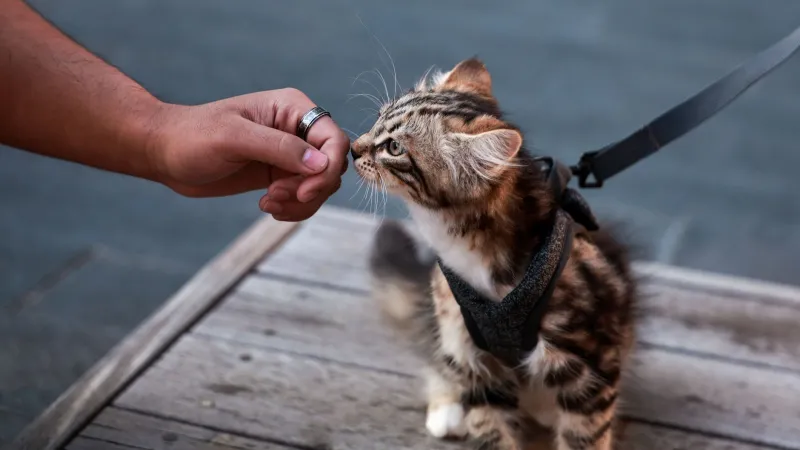
Let's set the scene. For the better part of half a year, your cat — let's call her Marguerite, because she absolutely has that energy — has been responding to the crinkle of a specific treat bag with the kind of enthusiasm usually reserved for, say, a golden retriever discovering a tennis ball factory. You shook that bag and she materialized. Through walls. Possibly through time.
You stocked up. You bought in bulk. You gave a glowing five-star Amazon review that mentioned her by name. You told your coworker about it unprompted during a Zoom call.
And then, one Tuesday, for no reason that exists within the known laws of physics or animal behavior, Marguerite sniffed her beloved treat, paused for what felt like three business days, and walked away. Slowly. Deliberately. Without looking back.
Congratulations. You have been betrayed.
The Taste Fatigue Hypothesis (Or: Science Tries to Defend Your Cat)
Veterinarians and animal behaviorists will tell you, with their calm, reasonable voices, that cats can genuinely experience something called "flavor fatigue" or "sensory-specific satiety." The idea is that after prolonged exposure to the same taste profile, a cat's sensory receptors essentially tap out. The food hasn't changed. The cat's relationship with the food has changed. It's not personal.
Except it feels deeply, profoundly personal.
Here's the thing: cats have far fewer taste receptors than humans — around 470 compared to our 9,000 — which means the flavors they do register hit differently. Repetition, some researchers suggest, may dull even those limited receptors over time. Essentially, your cat's tongue got bored before her brain did, and her brain is now staging a full theatrical production about it.
This is a legitimate biological explanation. It is also completely unsatisfying when you're standing in your kitchen at 7 AM, shaking a bag like a maraca, wondering what went wrong with your life.
The Psychological Warfare Hypothesis (Or: She Knows Exactly What She's Doing)
Alternatively — and bear with us here at Albert Cat, because we've spent a lot of time thinking about this — your cat has simply decided that the treat is no longer interesting as a concept. Not because her taste buds gave out, but because the mystery is gone.
For six months, that treat was a transaction: crinkle, appear, receive, purr. Efficient. Reliable. Almost too reliable. And cats, whatever else they are, are not creatures who tolerate predictability for long. The moment a reward becomes guaranteed, it loses its power over the cat and gives all the power back to you. And that is an arrangement Marguerite will simply not be entertaining.
By rejecting the treat, she has reintroduced uncertainty into the relationship. Now you're the one working for her approval again. You'll try different treats. You'll offer them with more enthusiasm. You'll research. You'll spend money. You'll feel something.
This is not taste fatigue. This is a long con.
The Chaos Variable (Or: There Is No Reason and That's the Point)
Of course, there's a third possibility, which is the most honest one: there is no reason. The treat is fine. Your cat is fine. Something shifted in the inscrutable internal weather system that governs feline preference, and the treat is now on the wrong side of it. No logic. No strategy. Just the pure, uncut chaos that lives at the center of every cat's decision-making process like a small, purring black hole.
Cats are, famously, not dogs. They did not evolve to need human approval. They domesticated themselves on their own terms, and those terms have always included the right to reverse any preference at any time without explanation or apology. The treat rejection isn't a message. It's not a negotiation. It's just Tuesday, and on this particular Tuesday, the salmon bites are dead to her.
Accepting this is the first step toward peace. Most cat owners never make it.
Practical Strategies for the Treat-Rejected Household
Since you're clearly not going to just accept the situation and move on (none of us are), here are some actual tactics for navigating the post-rejection era:
Rotate, don't commit. Introduce two or three treat varieties on a loose rotation so no single option becomes the default. This keeps novelty alive and prevents Marguerite from building up the resentment that comes with familiarity. Think of it as a treat playlist — you wouldn't listen to the same song on repeat for six months. Well, you might, but that's your business.
Try a texture swap. Sometimes the flavor isn't the problem — it's the format. If your cat has been eating crunchy treats, try a soft or freeze-dried alternative with a similar protein base. The taste might be familiar enough to feel safe but different enough to feel new. Cats are snobs about texture in ways that would exhaust a food critic.
Use the rejected treat as a topper. Crumble it over wet food or mix it into something she already likes. This is culinary sleight of hand, and it works with a frankly embarrassing frequency. The treat she refused to eat off the floor becomes irresistible when it's part of a larger production.
Wait it out. This is the most boring advice, and also sometimes the correct one. Put the bag away for three to four weeks and reintroduce it like it's something new. Cats have short memories for grudges against objects, even if their memories for human slights are apparently eternal.
Accept the possibility of a permanent split. Some treats are just over. Grieve appropriately. Leave a one-star review update. Move on.
The Real Takeaway (Which Is That Your Cat Is Running This Household)
Here's what the treat rejection ultimately reveals, beyond the biology and the behavioral speculation: your cat has preferences that she updates unilaterally, on a schedule you don't have access to, according to criteria she will never share. Your job is to adapt, to research, to offer alternatives, and to do all of this without complaint, because complaining to a cat about her treat preferences is a conversation that goes exactly nowhere.
Marguerite didn't sign a contract. She doesn't owe you consistency. She showed up, she enjoyed the treats for what she considered an appropriate run, and she has since moved her attention elsewhere. The audacity of it is genuinely impressive when you step back.
Shake a different bag. See what happens. Try to look like you're not desperate about it.
She'll know you are. She always does.